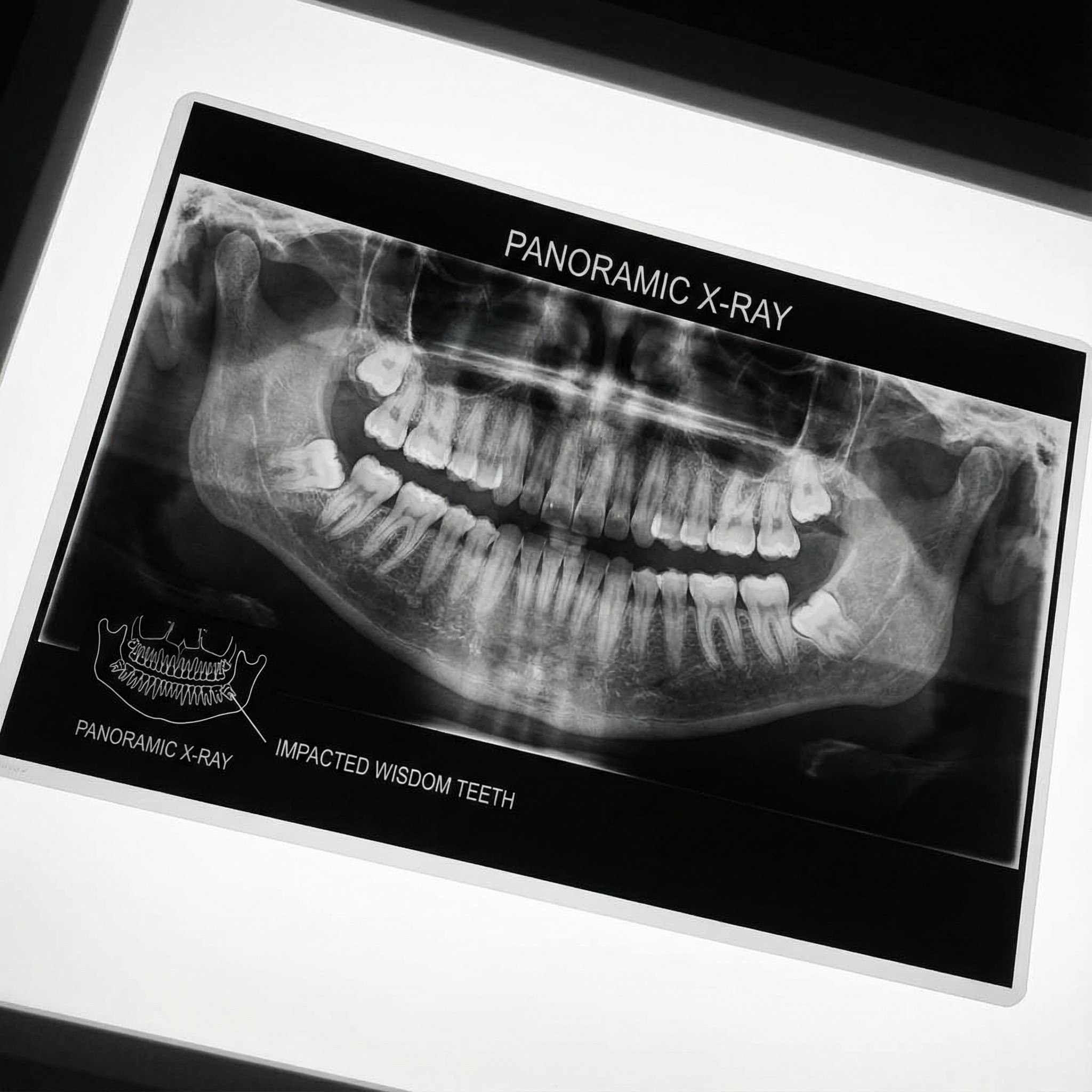
Panoramic x-ray showing impacted wisdom teeth
Wisdom Teeth Removal
Wisdom teeth are the last molars to develop in your mouth, typically appearing between ages 17-25. While some people's wisdom teeth come in without problems, many people experience issues when there isn't enough room in the jaw for these teeth to properly emerge. When wisdom teeth become impacted or cause crowding, extraction is often the best solution to prevent future dental problems.
Why Wisdom Teeth Need Removal
Impacted wisdom teeth can cause a variety of problems including pain, infection, damage to adjacent teeth, cysts, and crowding of other teeth. Early evaluation and treatment can help prevent these complications. Our experienced team uses advanced imaging technology to assess your wisdom teeth and determine the best treatment approach.
The Extraction Process
Wisdom teeth extraction is a common procedure performed in our office. Depending on the position and development of your teeth, we may refer you to an oral surgeon for complex cases. The procedure typically involves local anesthesia or sedation for your comfort, careful removal of the tooth, and detailed aftercare instructions to ensure proper healing. Most patients recover within a few days to a week.
Signs You May Need Wisdom Teeth Removal
Types of Impaction
Soft Tissue Impaction
Tooth has broken through bone but not enough gum tissue for proper eruption. Difficult to clean and prone to infection.
Partial Bony Impaction
Tooth has partially emerged but is partially covered by bone. Moderate difficulty extraction.
Complete Bony Impaction
Tooth is completely enclosed in jawbone. Most complex type, may require surgical extraction.
Benefits of Early Removal
What to Expect
Before the Procedure
- Comprehensive examination and x-rays
- Discussion of anesthesia options
- Review of medical history
- Pre-operative instructions
- Arrange transportation home
During the Procedure
- Local anesthesia or sedation administered
- Tooth carefully accessed and removed
- Surgical site cleaned
- Stitches placed if needed
- Gauze applied to control bleeding
- Typically 45 minutes to 1 hour
After the Procedure
- Rest for 24-48 hours
- Bite on gauze to control bleeding
- Apply ice packs to reduce swelling
- Take prescribed pain medication
- Eat soft foods for several days
- Avoid straws (causes dry socket)
Recovery Timeline
Peak swelling and discomfort, rest and ice
Swelling decreases, return to normal activities
Most healing complete, follow-up visit
Complete tissue healing
Post-Op Care Instructions
DO
- Bite on gauze for 30 minutes
- Apply ice packs (20 min on, 20 min off)
- Take medications as prescribed
- Rest with head elevated
- Eat soft, cool foods
- Gentle saltwater rinses (after 24 hrs)
- Maintain gentle oral hygiene
DON'T
- Use straws for at least 1 week
- Smoke or use tobacco
- Spit forcefully
- Rinse vigorously first 24 hours
- Eat hard, crunchy, or spicy foods
- Exercise strenuously for 3-4 days
- Touch surgical site with tongue/fingers
Soft Food Suggestions
Stick to soft foods for the first few days after your procedure to promote healing.
Schedule Your Wisdom Teeth Evaluation
Early evaluation can prevent future complications. Contact us to schedule your consultation.