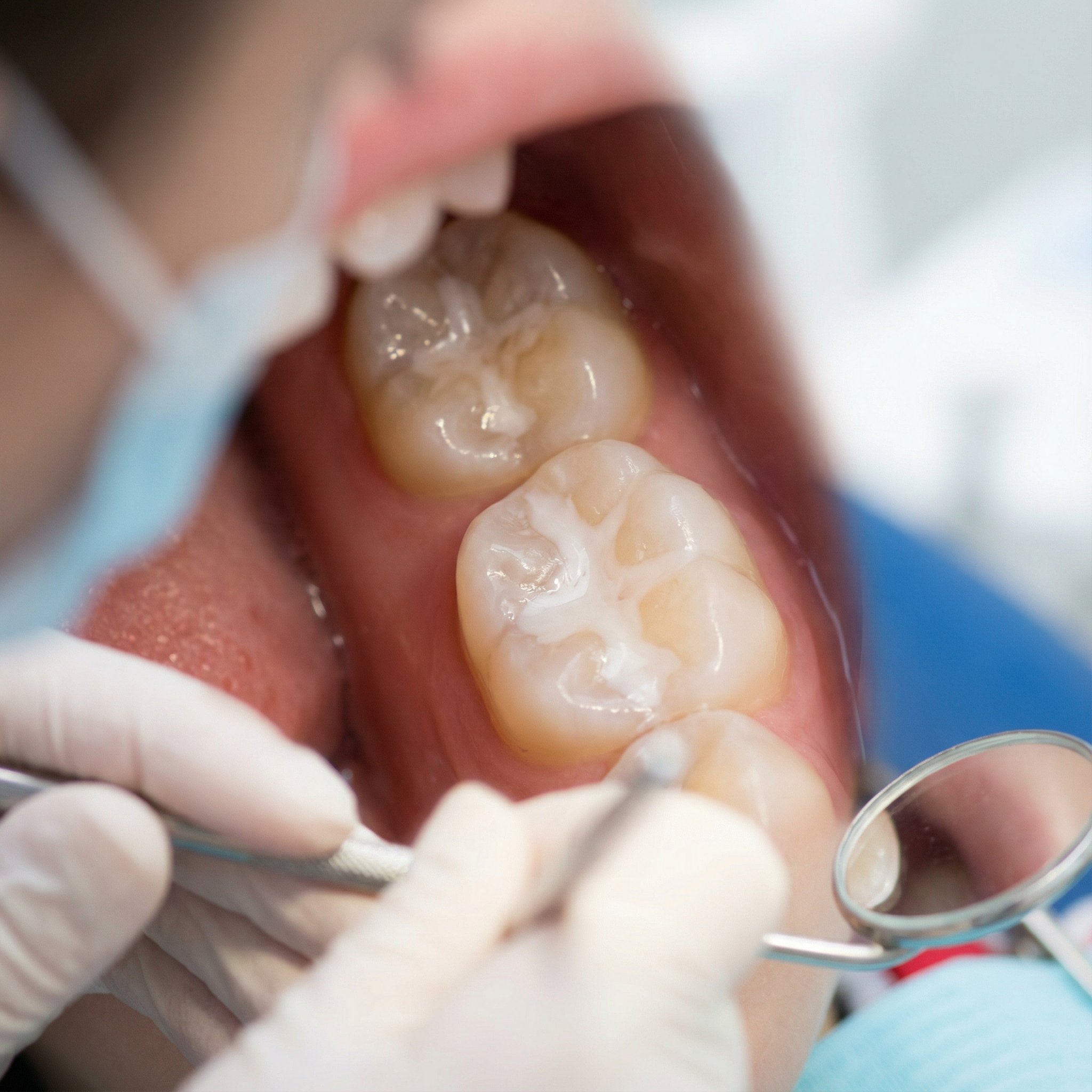
Dental Sealants
Sealants are a great way to protect against tooth decay and cavities on your back teeth (molars). These are the teeth that are most vulnerable to cavities and decay because they are used in the chewing process, and are the most difficult to reach and clean. Molars first come in at around 5-7 years of age, with a second set coming in between the ages of 11-14. It is best to have a sealant placed when the molars first come in to ensure they are protected early.
To place a sealant an adhesive is first applied to the teeth. The sealant is then placed over the adhesive as a liquid, as if it is painted right onto the tooth. The liquid then hardens and creates a barrier between your tooth and any plaque, food particles, and bacteria. Sealants last for about 10 years and can be reapplied if necessary.
Parent Tip: Timing Matters
The best time for sealants is as soon as permanent molars erupt—usually around ages 6 and 12. This protects teeth before cavities have a chance to form. Ask about sealants at your child's next checkup!
Why Sealants for Children?
The Sealant Application Process
Quick, painless, and completed in just one visit. Total time: about 5-10 minutes per tooth.
Cleaning
2 minutes
- Tooth thoroughly cleaned
- Dried completely
- No decay present verified
Preparation
1 minute
- Mild acid solution applied
- Roughens surface slightly
- Helps sealant bond
Application
2 minutes
- Liquid sealant painted on
- Covers all grooves and pits
- No drilling or pain
Hardening
1 minute
- Special curing light used
- Hardens in seconds
- Ready to use immediately
Who Needs Sealants?
Best Candidates (Children)
- Children ages 6-14 (when molars erupt)
- Kids with deep grooves in molars
- Children prone to cavities
- Kids who struggle with brushing
- Newly erupted permanent molars
Can Also Benefit Adults
- Adults without decay in molars
- Deep grooves or fissures present
- History of cavities on molars
- Preventive-minded patients
Benefits of Dental Sealants
Cavity Prevention
- • Reduces cavity risk by up to 80%
- • Protects during high-risk years
- • Especially effective on molars
- • Long-lasting protection (10 years)
For Children
- • Painless application
- • Quick procedure (minutes)
- • Immediate protection
- • Builds positive dental experiences
For Parents
- • Cost-effective prevention
- • Often covered by insurance
- • Saves money vs. fillings
- • Fewer dental emergencies
When Should Children Get Sealants?
Ages 5-7: First Permanent Molars
Six-year molars erupt. Apply sealants shortly after to protect during elementary years.
Ages 11-14: Second Permanent Molars
Twelve-year molars erupt. Apply sealants when fully emerged to protect during teen years.
Common Questions Parents Ask
Are sealants safe?
Yes, sealants have been used for over 40 years and are endorsed by the ADA and CDC. Benefits far outweigh any risks.
Do they contain BPA?
Trace amounts may be present, but exposure is extremely minimal—less than eating from canned food. Scientific consensus: safe.
Will my child feel anything?
No pain or discomfort. No shots or drilling needed. Your child may feel light pressure from tools and see a bright curing light.
Can sealants fall off?
They may chip or wear over time, but we check them at each visit. They're easy to repair or replace, and most stay intact for years.
Protect Your Child's Smile with Sealants
Give your child the best defense against cavities. Dental sealants are a quick, painless way to protect those hard-to-clean back molars during the cavity-prone years. Schedule an appointment to see if sealants are right for your child.