Dentures
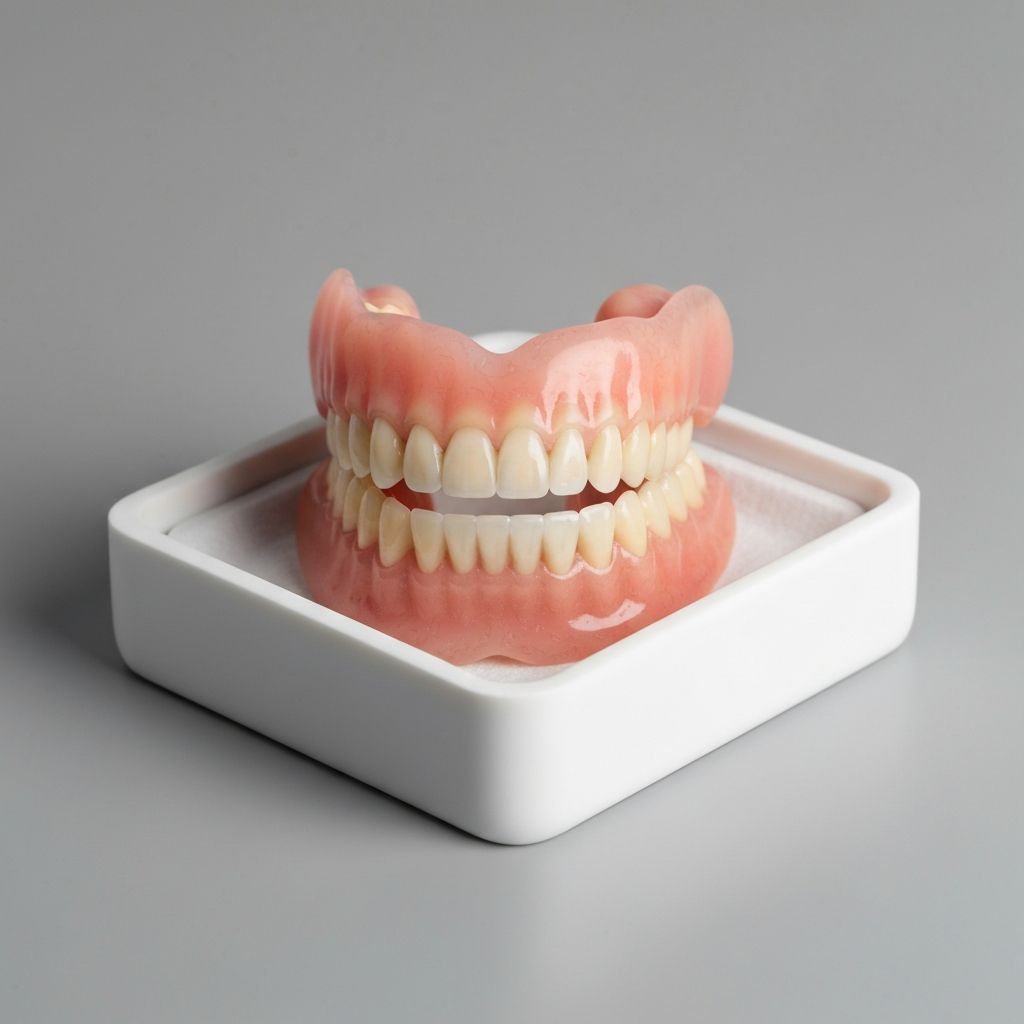
Dentures are a replacement for missing teeth that can be removed and put back into your mouth as you please. Depending on each individual patient case, they may receive full or partial dentures. Full dentures are used when all of the natural teeth are removed from the mouth and replaced with a full set of dentures. There are two types of full dentures.
Types of Full Dentures
Conventional Full Dentures
This is when all the teeth are removed and the tissue is given time to heal before the dentures are placed. It could take a few months for the gum tissue to heal completely, and during this time you will be without teeth.
Immediate Full Dentures
Prior to having your teeth removed, your dentist takes measurements and has dentures fitted for your mouth. After removing the teeth, the dentures are immediately placed in your mouth. The benefit is that you do not have to spend any time without teeth. You will, however, need to have a follow up visit to refit your dentures because the jaw bone will slightly change shape as your mouth heals. The dentures will need to be tightened after the jaw bone has healed.
Partial Dentures
Partial dentures are another option when not all of your teeth need to be removed. This is similar to a bridge, but it is not a permanent fixture in your mouth.
Adjustment Period
Your dentures may take some time to get used to. The flesh colored base of the dentures is placed over your gums. Some people say that it feels bulky or that they don't have enough room for their tongue. Other times the dentures might feel loose. These feelings will affect the way you eat and talk for a little while. Over time, your mouth becomes trained to eat and speak with your dentures and they begin to feel more and more like your natural teeth. They may never feel perfectly comfortable, but it is much better than the alternative of not having teeth.
Care Instructions
Even though dentures are not real teeth, you should care for them like they are. You should brush them to remove plaque and food particles before removing your dentures. After they have been removed you should place them directly into room temperature water or a denture cleaning solution. Never use hot water because it could warp the dentures. Your dentures are delicate, so make sure you are careful when handling them so you don't drop them. Also, never try to adjust your dentures yourself. You could ruin them, so you should always seek assistance from your dentist if they feel uncomfortable or loose.
Who Needs Dentures?
Full Dentures Candidates
- Lost all teeth in upper or lower jaw
- Remaining teeth severely damaged/diseased
- Advanced gum disease with tooth loss
- Extensive decay beyond repair
- Seeking most affordable replacement
- Not candidates for implants
Partial Dentures Candidates
- Missing several teeth (not all)
- Healthy remaining teeth
- Want removable option
- Bridge not suitable
- More affordable than implants
- Good gum health
Benefits of Dentures
Functional Benefits
- Restores ability to eat properly
- Improves speech clarity
- Supports facial muscles
- Prevents remaining teeth from shifting
- Restores chewing function
- Maintains facial structure
Aesthetic Benefits
- Natural appearance
- Customized to match your features
- Fills out facial contours
- Restores confident smile
- Looks like natural teeth
- Age-appropriate tooth color
Practical Benefits
- Removable for easy cleaning
- Most affordable tooth replacement
- Non-surgical solution
- Can be repaired if damaged
- Adjustable over time
- Quick fabrication process
Adjusting to Your Dentures
First Few Days
- Dentures feel bulky/strange
- Increased saliva production
- Minor sore spots possible
- Speaking feels different
- Eating requires practice
- Normal adjustment period
First Few Weeks
- Gradually feels more natural
- Speech improves significantly
- Eating becomes easier
- Sore spots identified and adjusted
- Learning insertion/removal
- Building confidence
First Few Months
- Dentures feel more comfortable
- Eating most foods possible
- Speech near-normal
- Facial muscles adapt
- Routine becomes second nature
- May need adjustments as gums change
Eating with Dentures
Start Soft
Pudding, yogurt, eggs, mashed potatoes, soft fruits, cooked vegetables, and ground meat
Progress Gradually
Small bites, chew on both sides evenly, cut food into small pieces, avoid sticky foods initially
Foods to Avoid
Very hard foods, sticky foods, foods requiring biting (corn on cob), very hot foods, small seeds
Speaking with Dentures
Common Challenges
Certain sounds difficult (s, f, th), slight lisp initially, dentures may click, words may slur
Improvement Tips
Practice reading aloud, speak slowly at first, practice problem sounds, bite and swallow before speaking
Timeline
Week 1: Noticeable changes | Week 2-3: Significant improvement | Month 2-3: Nearly normal speech
When to See Your Dentist
Immediate Concerns
- Dentures break or crack
- Severe sore spots or pain
- Dentures feel very loose
- Difficulty eating or speaking
- Signs of infection
- Persistent discomfort
Regular Adjustments
- Dentures feel slightly loose
- Mild discomfort
- Minor sore spots
- Changes in fit
- Clicking or slipping
- Speech changes
Relines & Replacements
- Reline every 1-2 years
- Replace every 5-7 years typically
- When significantly worn
- If damaged beyond repair
- Major changes in fit
- Excessive wear on teeth
Be Patient with Yourself
Adjusting to dentures takes time—usually 4-8 weeks. Initial discomfort is normal and temporary. With practice, eating and speaking become natural again. We're here to help with any adjustments you need along the way.
Restore Your Smile with Custom Dentures
Don't let missing teeth hold you back from eating, speaking, and smiling confidently. Modern dentures provide natural-looking, functional tooth replacement. Schedule a consultation to explore your options.